 libterm.com
 Forward design focuses on planning a product or system from the initial concept to final implementation, emphasizing a clear, step-by-step process that prioritizes user needs and functional requirements. By anticipating potential challenges early, this approach ensures smoother development and more effective solutions. Discover how forward design can transform your projects by reading the full article.
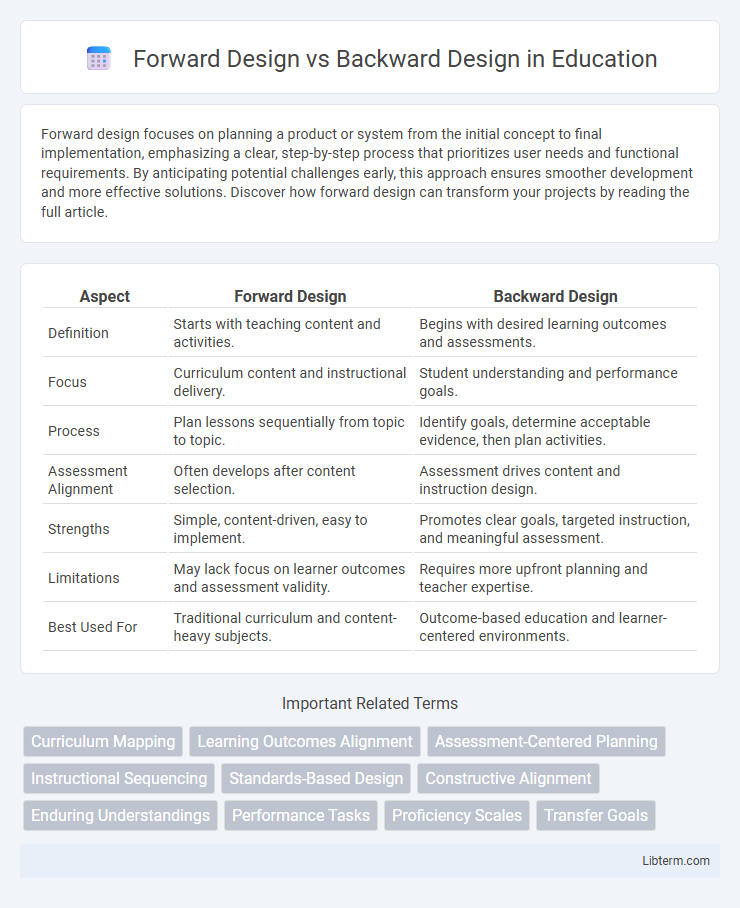
Table of Comparison
| Aspect | Forward Design | Backward Design |
|---|---|---|
| Definition | Starts with teaching content and activities. | Begins with desired learning outcomes and assessments. |
| Focus | Curriculum content and instructional delivery. | Student understanding and performance goals. |
| Process | Plan lessons sequentially from topic to topic. | Identify goals, determine acceptable evidence, then plan activities. |
| Assessment Alignment | Often develops after content selection. | Assessment drives content and instruction design. |
| Strengths | Simple, content-driven, easy to implement. | Promotes clear goals, targeted instruction, and meaningful assessment. |
| Limitations | May lack focus on learner outcomes and assessment validity. | Requires more upfront planning and teacher expertise. |
| Best Used For | Traditional curriculum and content-heavy subjects. | Outcome-based education and learner-centered environments. |
Understanding Forward Design and Backward Design
Forward Design starts with defining learning activities and content before setting assessment goals, emphasizing content delivery and instructional steps. Backward Design begins with clearly identifying desired learning outcomes and assessment criteria, ensuring alignment between objectives, assessments, and instructional methods. Understanding both approaches enables educators to strategically plan curricula that meet specific educational goals while addressing student needs effectively.
Key Principles of Forward Design
Forward Design emphasizes starting with content selection and instructional activities before determining assessment methods, ensuring that teaching tools and materials guide learning progression. It prioritizes a linear sequence where curriculum development follows a predetermined path from topics to delivery strategies. This approach supports detailed lesson planning but may lack alignment with desired learning outcomes or standards.
Core Concepts of Backward Design
Backward Design centers on identifying desired learning outcomes before planning instructional activities and assessments, ensuring alignment throughout the educational process. Its core concepts include establishing clear goals, determining acceptable evidence of student understanding, and designing learning experiences that directly support achieving those outcomes. This approach contrasts with Forward Design, which typically begins with activities and content without prioritizing end goals, potentially leading to misaligned assessments and objectives.
Comparing Goals: Forward vs Backward Approaches
Forward design emphasizes creating learning activities first, aiming to cover content comprehensively, while backward design prioritizes defining clear learning outcomes before planning instruction. Backward design ensures alignment between objectives, assessments, and activities, promoting targeted and effective teaching. Forward design may lead to content-heavy lessons with less focus on measurable student understanding.
Planning Curriculum: Sequence and Structure Differences
Forward design in curriculum planning begins with establishing specific learning activities and content, progressing logically towards desired outcomes, emphasizing a linear development of skills and knowledge. Backward design prioritizes defining clear learning objectives and assessments first, then plans instructional methods and materials to achieve those goals, ensuring alignment between goals, assessments, and teaching. The sequence in forward design flows from content to outcome, while backward design structures the curriculum around targeted results, promoting coherence and focused learning pathways.
Assessing Learning Outcomes in Both Designs
Forward design emphasizes defining clear learning outcomes early, guiding curriculum development and assessment methods to align tightly with those goals. Backward design starts with identifying desired learning outcomes, then plans assessments and instructional activities to ensure students achieve the specified objectives. Assessing learning outcomes in both designs involves aligning evaluation tools with targeted competencies to measure student understanding and skills effectively.
Advantages of Forward Design
Forward Design offers the advantage of a straightforward, linear process that begins with defining learning activities and materials, making it easier for educators to implement lesson plans quickly. This approach allows for flexibility in content delivery and supports creativity in developing instructional methods tailored to students' needs. Furthermore, Forward Design facilitates immediate adjustments during the teaching process, enhancing responsiveness to real-time classroom dynamics and learner feedback.
Benefits of Backward Design
Backward Design enhances curriculum effectiveness by starting with clear learning objectives, ensuring all instructional activities align directly with desired outcomes. It promotes focused assessment strategies that accurately measure student understanding and progress. This approach increases instructional coherence, helping educators prioritize essential content and skills for deeper student mastery.
Challenges and Limitations of Each Approach
Forward design often faces challenges related to a lack of alignment between instructional materials and learning outcomes, resulting in inefficient pacing and disconnected assessments. Backward design can be limited by the initial emphasis on assessment creation, which may constrain creativity in content development and require significant upfront planning time. Both approaches struggle with balancing flexibility and structure, impacting adaptability to diverse learner needs and evolving educational standards.
Choosing the Right Design for Effective Instruction
Selecting the appropriate instructional design model significantly impacts learning outcomes, with Forward Design emphasizing content delivery starting from objectives to assessments, and Backward Design beginning with desired results to inform teaching strategies. Backward Design enhances clarity in learning targets and assessment alignment, fostering deeper understanding and skill mastery. Educators must evaluate curriculum goals, student needs, and assessment methods to decide whether a goal-driven or content-driven approach best supports effective instruction.
Forward Design Infographic