 libterm.com
 Traditional curriculum design prioritizes a structured approach, emphasizing sequential learning and standardized content to ensure consistent educational outcomes. It often focuses on subject-specific knowledge, measurable objectives, and teacher-centered instruction, fostering a stable foundation for learners. Explore the article to discover how this method impacts your educational experience and compare it with modern alternatives.
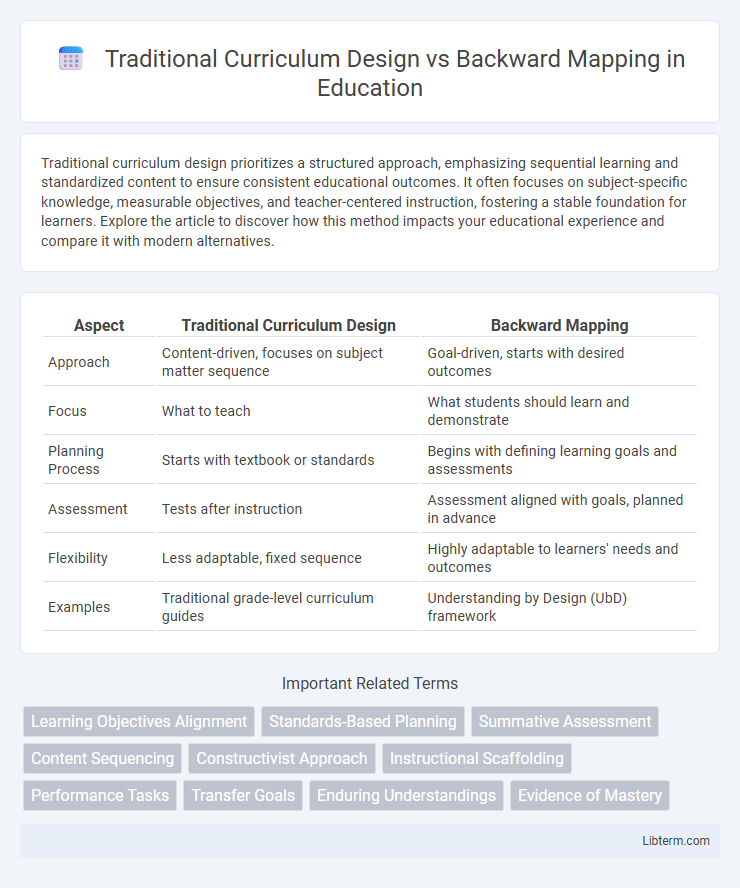
Table of Comparison
| Aspect | Traditional Curriculum Design | Backward Mapping |
|---|---|---|
| Approach | Content-driven, focuses on subject matter sequence | Goal-driven, starts with desired outcomes |
| Focus | What to teach | What students should learn and demonstrate |
| Planning Process | Starts with textbook or standards | Begins with defining learning goals and assessments |
| Assessment | Tests after instruction | Assessment aligned with goals, planned in advance |
| Flexibility | Less adaptable, fixed sequence | Highly adaptable to learners' needs and outcomes |
| Examples | Traditional grade-level curriculum guides | Understanding by Design (UbD) framework |
Introduction to Curriculum Design Approaches
Traditional curriculum design follows a linear progression, emphasizing content coverage and predetermined learning objectives. Backward mapping, also known as backward design, starts with identifying desired learning outcomes and then plans assessments and instructional activities to achieve those goals. This approach ensures alignment between objectives, assessments, and teaching methods, fostering a more goal-oriented and effective curriculum.
Understanding Traditional Curriculum Design
Traditional Curriculum Design emphasizes a linear, content-driven approach where educators select topics based on academic standards and sequence them logically over time. This method often prioritizes comprehensive coverage of subject matter, relying heavily on textbooks and predetermined objectives without always aligning directly with student outcomes. Its structure supports teacher-led instruction but may lack flexibility in addressing diverse learner needs or real-world application goals.
Key Principles of Backward Mapping
Backward Mapping emphasizes starting curriculum design with clear learning goals and desired outcomes, ensuring alignment between objectives, assessments, and instructional activities. It prioritizes identifying the essential knowledge and skills students must acquire, enabling targeted and efficient teaching strategies. This approach fosters coherence and focus, contrasting traditional curriculum design which often begins with content selection rather than end goals.
Curriculum Goals: Content Coverage vs Desired Outcomes
Traditional curriculum design emphasizes extensive content coverage, prioritizing the delivery of a predetermined body of knowledge as the main goal. Backward mapping, however, centers on desired outcomes by first identifying specific learning objectives and then aligning instructional content and assessments to achieve those goals. This results-oriented approach ensures that curriculum development is guided by measurable competencies rather than exhaustive topic lists.
Planning Sequence: Forward vs Backward Design
Traditional curriculum design follows a forward planning sequence, beginning with selecting content and activities before defining learning outcomes, often leading to mismatched objectives and assessments. Backward mapping starts by identifying desired learning outcomes and assessments, ensuring alignment and focused instruction throughout the curriculum. This backward design framework enhances coherence, prioritizes essential skills, and fosters measurable student achievements.
Role of Assessment in Each Approach
Traditional curriculum design places assessment at the end of the learning process, primarily using tests to evaluate student understanding after instruction. In contrast, backward mapping begins with clearly defined learning goals and designs assessments first, ensuring that all instructional activities align directly with desired outcomes. This approach enhances the effectiveness of teaching by making assessments a guiding tool rather than a concluding measure.
Flexibility and Adaptability in Curriculum Design
Traditional curriculum design follows a linear, content-driven approach that often limits flexibility and adaptability to changing educational needs or student differences. In contrast, backward mapping starts with desired learning outcomes and allows educators to design assessments and instructional methods that can be modified based on student performance and evolving standards. This outcome-focused strategy enhances curriculum responsiveness, enabling dynamic adjustments to content and teaching strategies for diverse learning environments.
Impact on Student Learning and Engagement
Traditional curriculum design often follows a linear progression focused on content delivery, which may lead to passive student engagement and limited emphasis on mastering key competencies. Backward mapping begins with identifying desired learning outcomes and assessments, driving instruction that aligns with goals and enhances active learning, critical thinking, and skill retention. This outcome-driven approach significantly improves student engagement by ensuring learning activities are purposeful and directly tied to measurable achievements.
Teacher Roles and Responsibilities
Traditional curriculum design assigns teachers the role of content deliverers, primarily focusing on following predetermined lesson plans and assessments. In contrast, backward mapping requires teachers to act as curriculum architects who begin with identifying desired learning outcomes and then create assessments and instructional strategies aligned with these goals. This approach demands teachers to be reflective practitioners, continuously adjusting their methods to meet student needs and achieve targeted competencies.
Choosing the Right Curriculum Design Approach
Choosing the right curriculum design approach involves understanding the fundamental differences between Traditional Curriculum Design and Backward Mapping. Traditional Curriculum Design focuses on content delivery and sequencing based on academic standards, prioritizing subject matter expertise and chronological progression. Backward Mapping starts with defining desired learning outcomes and assessments, ensuring alignment between goals, instruction, and evaluation to enhance student achievement and instructional clarity.
Traditional Curriculum Design Infographic