 libterm.com
 Backward Design is an instructional planning method that starts with identifying desired learning outcomes before developing assessments and instructional activities. This approach ensures that all teaching efforts align directly with your educational goals, promoting more effective and purposeful learning experiences. Discover how implementing Backward Design can transform your curriculum by reading the full article.
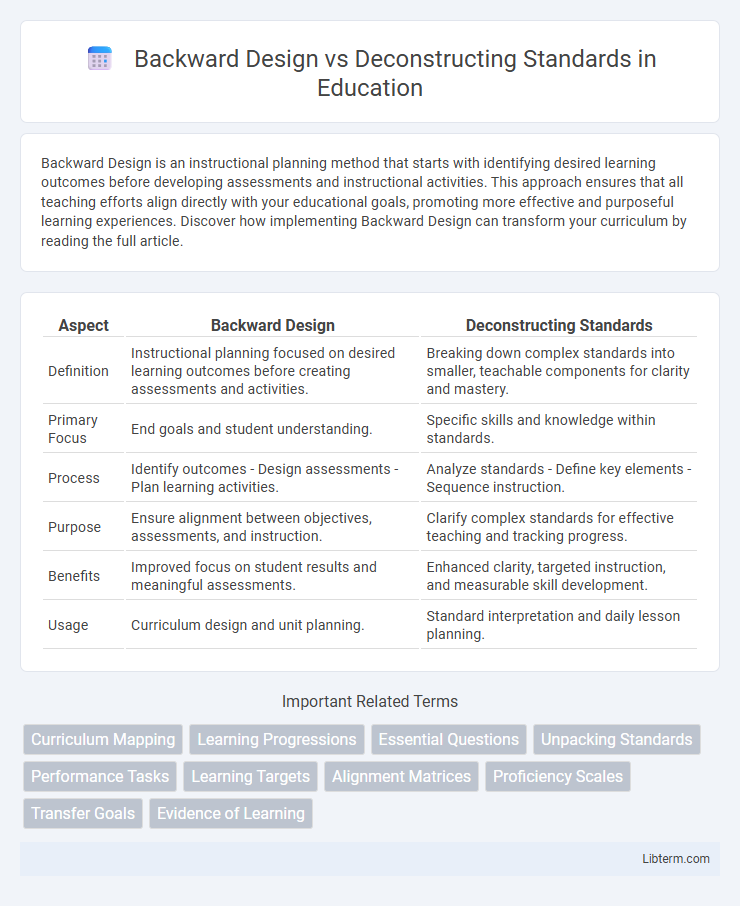
Table of Comparison
| Aspect | Backward Design | Deconstructing Standards |
|---|---|---|
| Definition | Instructional planning focused on desired learning outcomes before creating assessments and activities. | Breaking down complex standards into smaller, teachable components for clarity and mastery. |
| Primary Focus | End goals and student understanding. | Specific skills and knowledge within standards. |
| Process | Identify outcomes - Design assessments - Plan learning activities. | Analyze standards - Define key elements - Sequence instruction. |
| Purpose | Ensure alignment between objectives, assessments, and instruction. | Clarify complex standards for effective teaching and tracking progress. |
| Benefits | Improved focus on student results and meaningful assessments. | Enhanced clarity, targeted instruction, and measurable skill development. |
| Usage | Curriculum design and unit planning. | Standard interpretation and daily lesson planning. |
Introduction to Backward Design and Deconstructing Standards
Backward Design emphasizes starting curriculum planning by identifying desired learning outcomes and then developing assessments and instructional activities to meet those goals. Deconstructing Standards focuses on breaking down educational standards into specific, teachable components to clarify learning targets and guide lesson development. Both methods prioritize clear learning objectives but differ in their approach: Backward Design aligns teaching with end goals, while Deconstructing Standards dissects standards to create precise instructional steps.
Defining Backward Design: Core Principles
Backward Design centers on planning educational curricula by starting with the end goals, such as desired learning outcomes and assessments, and then designing instruction to achieve these objectives. Core principles include identifying clear learning targets, determining acceptable evidence for mastery, and planning engaging learning experiences that align with these targets. This approach ensures coherence in instruction and assessment, promoting deeper understanding and skill acquisition.
What is Deconstructing Standards?
Deconstructing standards involves breaking down educational standards into manageable, specific learning objectives to clarify what students must know and be able to do. This process helps educators identify key skills and knowledge components, allowing for targeted instruction and assessment aligned with curriculum goals. Unlike Backward Design, which starts with desired outcomes and plans backward, deconstructing standards emphasizes dissecting standards to effectively implement and measure student learning.
Key Differences Between Backward Design and Deconstructing Standards
Backward Design centers on planning curriculum by starting with desired learning outcomes and then developing assessments and instructional methods to achieve those goals. Deconstructing Standards involves breaking down educational standards into specific, manageable learning targets to clarify expectations and guide instruction. The key difference lies in Backward Design's outcome-driven planning approach versus Deconstructing Standards' focus on dissecting standards for detailed instructional clarity.
Step-by-Step Process: Backward Design
Backward Design follows a three-step process starting with identifying desired learning outcomes based on curriculum standards and assessing essential skills. Next, educators determine acceptable evidence by designing assessments that align with these outcomes to measure student understanding effectively. Finally, they plan instructional activities and materials that guide learners toward achieving the targeted objectives, ensuring coherence between goals, assessments, and teaching methods.
Step-by-Step Process: Deconstructing Standards
Deconstructing standards involves breaking down complex learning goals into specific, measurable objectives that guide lesson planning and assessment design. This step-by-step process begins with identifying key vocabulary, concepts, and skills within a standard, followed by analyzing the cognitive demands and distinguishing between content and process components. Educators then align instructional activities and evaluations with these clarified objectives to ensure targeted, effective teaching and learning outcomes.
Benefits and Limitations of Backward Design
Backward Design offers the benefit of aligning curriculum, assessments, and instructional strategies with clear learning goals, enhancing student understanding and mastery. However, its limitation lies in the potential rigidity, which may restrict teacher creativity and adaptability during lessons. Unlike Deconstructing Standards, which breaks down standards into smaller, manageable parts, Backward Design focuses on outcome-driven planning but can be time-consuming to implement effectively.
Advantages and Challenges of Deconstructing Standards
Deconstructing standards allows educators to pinpoint specific learning objectives and align instruction tightly with assessment criteria, enhancing clarity and focus in lesson planning. This method facilitates differentiation by breaking down complex standards into manageable skills, but it can be time-consuming and may require deep content knowledge to avoid misinterpretation of standards. Challenges include ensuring consistency across grade levels and maintaining the coherence of the overall curriculum while addressing individual standard components.
Practical Applications in Curriculum Planning
Backward Design centers curriculum planning on desired learning outcomes by identifying end goals and designing assessments and instructional activities accordingly, ensuring alignment and clarity throughout the process. Deconstructing Standards involves breaking down complex educational standards into manageable learning targets and competencies, facilitating precise lesson planning and targeted skill development. Employing both methods in curriculum design enhances instructional effectiveness by combining clear goal-setting with detailed content analysis, promoting cohesive and measurable student learning progress.
Choosing the Right Approach for Your Instructional Goals
Backward Design centers instruction around desired learning outcomes by first defining clear goals, then planning assessments and activities that align directly with those targets. Deconstructing Standards breaks complex educational standards into smaller, manageable objectives to guide detailed lesson planning and ensure thorough coverage. Selecting the right approach depends on whether the goal is to emphasize end results and assessment alignment (Backward Design) or to systematically cover all components of standards for foundational mastery (Deconstructing Standards).
Backward Design Infographic