 libterm.com
 Collaborative design harnesses the collective creativity and expertise of diverse team members to produce innovative solutions that meet complex challenges. By fostering open communication and shared decision-making, it enhances problem-solving efficiency and ensures that multiple perspectives are integrated into the final product. Discover how embracing collaborative design can transform Your projects and maximize success in the rest of this article.
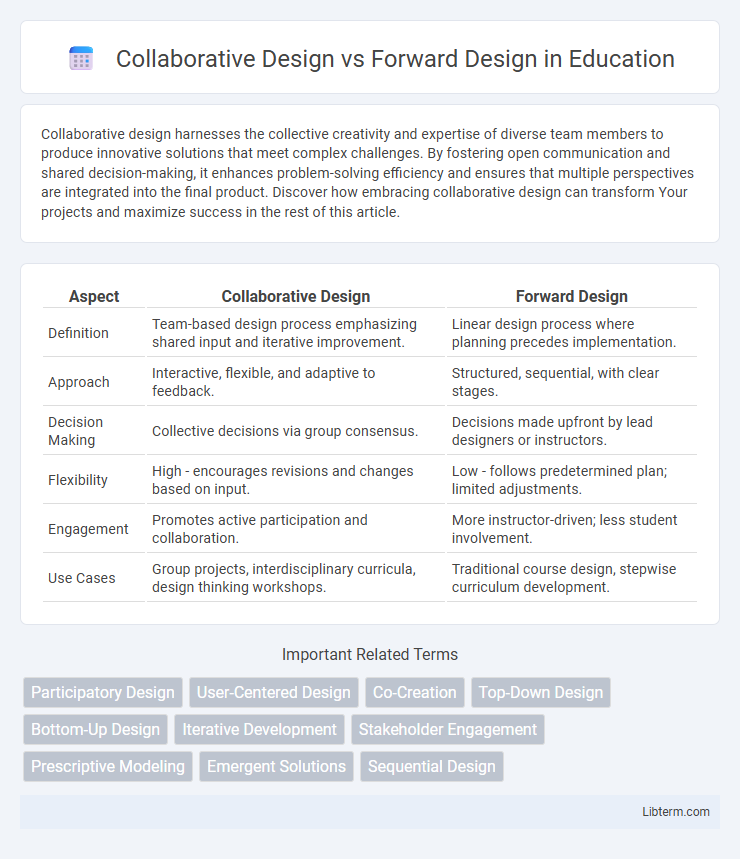
Table of Comparison
| Aspect | Collaborative Design | Forward Design |
|---|---|---|
| Definition | Team-based design process emphasizing shared input and iterative improvement. | Linear design process where planning precedes implementation. |
| Approach | Interactive, flexible, and adaptive to feedback. | Structured, sequential, with clear stages. |
| Decision Making | Collective decisions via group consensus. | Decisions made upfront by lead designers or instructors. |
| Flexibility | High - encourages revisions and changes based on input. | Low - follows predetermined plan; limited adjustments. |
| Engagement | Promotes active participation and collaboration. | More instructor-driven; less student involvement. |
| Use Cases | Group projects, interdisciplinary curricula, design thinking workshops. | Traditional course design, stepwise curriculum development. |
Introduction to Collaborative Design and Forward Design
Collaborative Design involves multiple stakeholders working together throughout the design process to generate ideas, provide feedback, and make decisions, fostering innovation and inclusivity. Forward Design follows a linear approach where designers develop solutions based on initial requirements without iterative collaboration, often resulting in less flexibility. Emphasizing Cross-functional teams, real-time communication, and iterative feedback distinguishes Collaborative Design from the more sequential, top-down method of Forward Design.
Key Principles of Collaborative Design
Collaborative Design centers on active participation, transparent communication, and iterative feedback among diverse stakeholders to create user-centric solutions. It emphasizes shared ownership, equal contribution, and collective problem-solving to harness varied expertise and perspectives. This approach fosters innovation by continuously incorporating real-time input and adapting designs to meet evolving user needs.
Core Concepts of Forward Design
Forward Design centers on a linear, step-by-step development process where requirements are gathered upfront and solutions are crafted based on predefined specifications. This approach emphasizes predictive planning, structured decision-making, and early problem identification to guide project outcomes. Core concepts include requirement stability, systematic progression through design phases, and minimizing iterative revisions compared to Collaborative Design.
Differences in Team Dynamics
Collaborative design fosters a dynamic where team members actively contribute ideas and iterate solutions together, promoting shared ownership and open communication. Forward design typically follows a linear process with clearly defined roles, emphasizing individual accountability and sequential task completion. This difference affects creativity levels, flexibility, and the overall adaptability of the team throughout the project lifecycle.
Communication Strategies in Both Approaches
Collaborative design emphasizes continuous, open communication among team members, fostering shared understanding through regular meetings, feedback loops, and real-time collaboration tools that enhance idea exchange and co-creation. Forward design relies on a more linear communication strategy, where information flows top-down from designers to stakeholders, emphasizing detailed documentation and specifications to guide subsequent development phases. Effective communication in collaborative design reduces misunderstandings and accelerates innovation, while forward design ensures clarity and consistency through structured, predetermined communication channels.
Decision-Making Processes Compared
Collaborative Design fosters decision-making through collective input, promoting diverse perspectives and iterative feedback, which enhances creativity and problem-solving effectiveness. In contrast, Forward Design typically relies on top-down decision-making with predefined objectives, streamlining processes but potentially limiting adaptability and stakeholder participation. The dynamic interaction in Collaborative Design enables more flexible and democratic outcomes, while Forward Design emphasizes efficiency and clarity in decision pathways.
Flexibility and Adaptability in Design Models
Collaborative Design excels in flexibility and adaptability by incorporating diverse stakeholder inputs throughout the development process, allowing continuous refinements based on evolving requirements. Forward Design follows a more linear, predefined approach, which can limit responsiveness to change but provides clear structure and predictability. Emphasizing adaptability, Collaborative Design supports iterative feedback and dynamic adjustments, making it ideal for complex projects with uncertain or shifting objectives.
Impact on Project Outcomes
Collaborative Design enhances project outcomes by integrating diverse stakeholder inputs early, leading to increased innovation and reduced rework. Forward Design relies on linear planning, which can streamline processes but often limits adaptability and stakeholder engagement. Projects utilizing Collaborative Design demonstrate higher user satisfaction and better alignment with evolving requirements compared to those following Forward Design.
Challenges and Limitations
Collaborative design faces challenges such as coordinating diverse stakeholder inputs, managing conflicting priorities, and ensuring clear communication within multidisciplinary teams. Forward design often struggles with limitations in flexibility and adaptability, as it relies on predefined requirements that may not account for evolving user needs or contextual changes. Both approaches must address issues related to resource allocation and maintaining alignment with project goals throughout the development process.
Choosing the Right Approach for Your Project
Choosing between Collaborative Design and Forward Design depends on project complexity and stakeholder involvement; Collaborative Design fosters iterative feedback and shared creativity, ideal for dynamic or user-centered projects. Forward Design follows a linear, top-down process, best suited for projects with well-defined requirements and tight deadlines. Prioritizing team communication and project goals ensures selecting the most effective design methodology to optimize outcomes.
Collaborative Design Infographic