 libterm.com
 A signing bonus is a financial incentive a company offers to attract qualified candidates quickly, often used in competitive job markets or to fill urgent vacancies. This bonus can significantly boost your overall compensation package and may include one-time payments or staggered distributions. Discover how a signing bonus can impact your salary negotiations and learn strategies to maximize its benefits in the rest of this article.
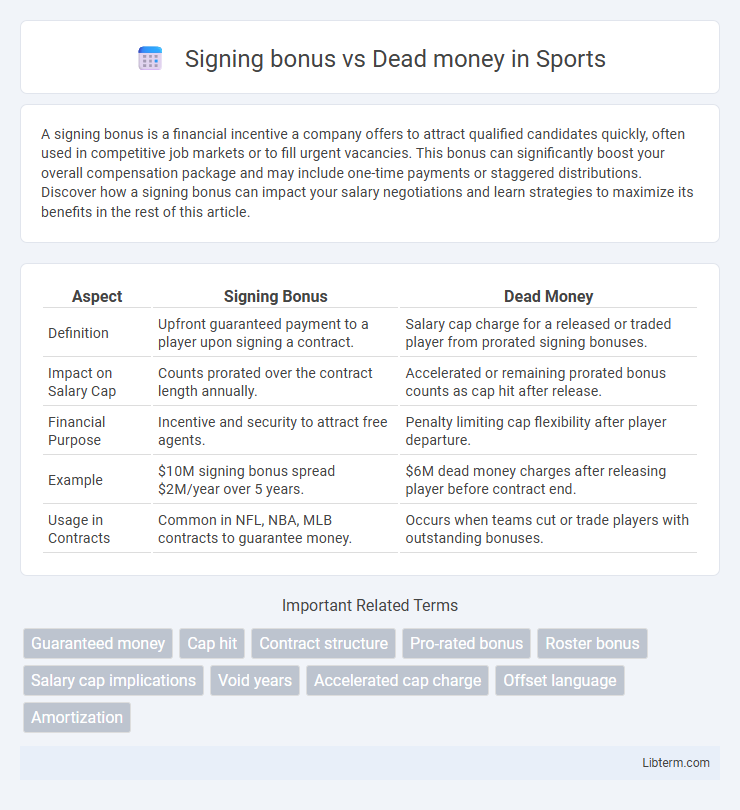
Table of Comparison
| Aspect | Signing Bonus | Dead Money |
|---|---|---|
| Definition | Upfront guaranteed payment to a player upon signing a contract. | Salary cap charge for a released or traded player from prorated signing bonuses. |
| Impact on Salary Cap | Counts prorated over the contract length annually. | Accelerated or remaining prorated bonus counts as cap hit after release. |
| Financial Purpose | Incentive and security to attract free agents. | Penalty limiting cap flexibility after player departure. |
| Example | $10M signing bonus spread $2M/year over 5 years. | $6M dead money charges after releasing player before contract end. |
| Usage in Contracts | Common in NFL, NBA, MLB contracts to guarantee money. | Occurs when teams cut or trade players with outstanding bonuses. |
Understanding Signing Bonuses in NFL Contracts
Signing bonuses in NFL contracts are upfront payments guaranteed to players upon signing, distinct from dead money, which represents salary cap charges for players no longer on a team. These bonuses incentivize players while providing teams with salary cap flexibility, as the bonus amount is prorated over the contract's length for cap accounting. Understanding the impact of signing bonuses on team salary caps helps clarify contract structuring and financial strategies within the NFL.
What is Dead Money in the NFL?
Dead money in the NFL refers to salary cap charges for players no longer on a team's roster, typically resulting from released or traded players whose guaranteed money still counts against the cap. This dead money impacts a team's financial flexibility and can limit their ability to sign new players or retain current talent. Understanding the contrast between signing bonuses, which are often prorated over contract terms, and dead money is essential for effective salary cap management.
Key Differences: Signing Bonus vs Dead Money
Signing bonus refers to the upfront payment given to players upon signing a contract, often spread out over the contract duration for salary cap purposes. Dead money is the salary cap space occupied by a player who is no longer on the team, typically resulting from guaranteed amounts from signing bonuses and roster guarantees. The key difference lies in signing bonuses being a proactive incentive to attract talent, while dead money represents a financial penalty or leftover cap charge after a player is released or traded.
How Signing Bonuses Impact the Salary Cap
Signing bonuses provide immediate financial incentives to players while spreading the cap hit evenly over the contract's duration, which strategically manages team salary cap space. Dead money results from players released or traded before their contract ends, counting against the cap without contributing on-field value, often complicating cap flexibility. Teams use signing bonuses to front-load player compensation while minimizing immediate cap hits, balancing short-term financial impact with long-term cap health.
Dead Money: Cap Implications Explained
Dead money refers to salary cap space occupied by former players who have been released or traded but still count against the team's cap due to guaranteed money. Unlike signing bonuses, which are prorated over the contract's length to lessen immediate cap hits, dead money results from accelerated or remaining prorated bonuses after a player's departure. Understanding dead money's impact helps teams manage cap flexibility, as large dead money charges can hinder future player acquisitions and roster improvements.
Strategic Use of Signing Bonuses by Teams
Signing bonuses serve as a strategic tool for teams to attract top talent while managing salary cap implications by spreading the bonus amount over the contract's length for cap flexibility. Dead money arises when a player is released or traded before the contract ends, representing the unamortized portion of signing bonuses that accelerate against the cap. Teams maximize signing bonuses to secure key players upfront, balancing the risk of dead money to maintain roster competitiveness and financial health.
How Dead Money Affects Roster Decisions
Dead money significantly impacts roster decisions by limiting a team's available salary cap space, forcing management to weigh the cost of retaining underperforming players against the benefits of acquiring new talent. Unlike signing bonuses that provide immediate financial incentives to players, dead money represents sunk costs from released or traded players, reducing flexibility in contract negotiations. Teams must carefully balance dead money commitments to optimize roster construction and maintain competitive depth across positions.
Real-World Examples: Signing Bonus & Dead Money
Signing bonuses provide immediate financial incentives to players, as seen in Patrick Mahomes' $10 million signing bonus with the Kansas City Chiefs in 2020, which rewarded commitment upfront. In contrast, dead money refers to salary cap space occupied by players no longer on the team, exemplified by the Dallas Cowboys' $17 million dead money hit for releasing Amari Cooper in 2022. Understanding the impact of signing bonuses versus dead money helps teams manage cap flexibility and roster construction strategically.
Negotiating Contracts: Risks and Rewards
Negotiating contracts involves weighing the signing bonus against dead money to balance immediate rewards with potential long-term financial risks. A signing bonus provides upfront guaranteed income, enhancing player leverage during contract discussions, while dead money represents cap space occupied by non-active contract funds, often complicating future negotiations. Understanding the implications of dead money on team salary caps helps players and agents strategize contract terms that maximize earnings while minimizing release or trade penalties.
Long-Term Effects on Team Financial Health
A signing bonus provides immediate guaranteed cash to players but is prorated over the contract's length for salary cap purposes, aiding in short-term cap flexibility while potentially creating higher dead money if the player is released early. Dead money represents cap charges from signing bonuses or guarantees that cannot be avoided, limiting long-term financial flexibility and constraining future team roster moves. Managing the balance between large signing bonuses and potential dead money is crucial for sustaining healthy cap space and enabling strategic acquisitions over multiple seasons.
Signing bonus Infographic