 libterm.com
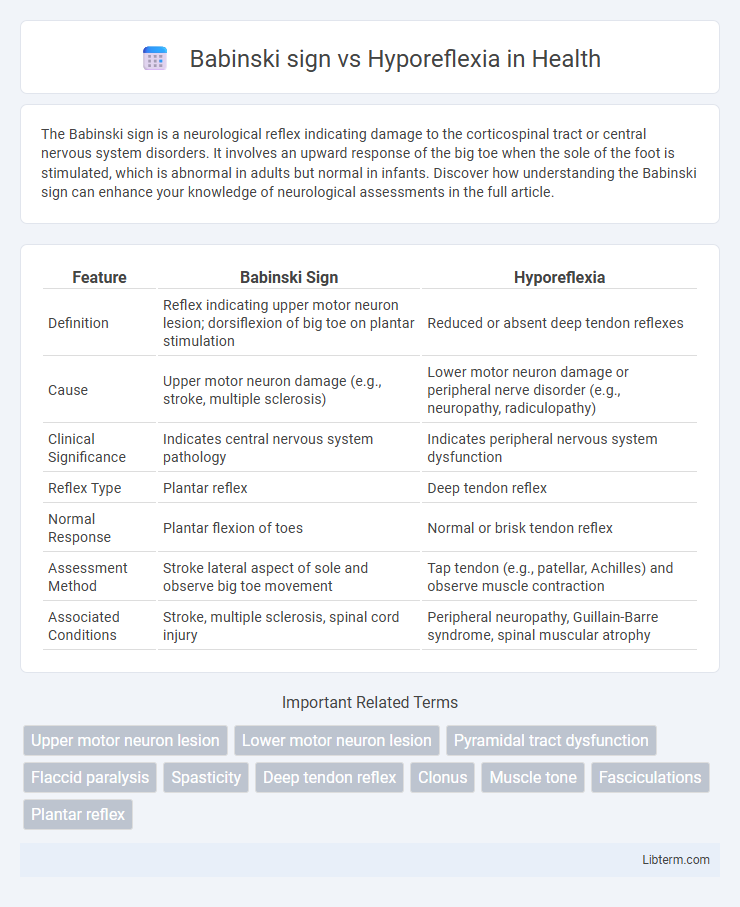
 The Babinski sign is a neurological reflex indicating damage to the corticospinal tract or central nervous system disorders. It involves an upward response of the big toe when the sole of the foot is stimulated, which is abnormal in adults but normal in infants. Discover how understanding the Babinski sign can enhance your knowledge of neurological assessments in the full article.
Table of Comparison
| Feature | Babinski Sign | Hyporeflexia |
|---|---|---|
| Definition | Reflex indicating upper motor neuron lesion; dorsiflexion of big toe on plantar stimulation | Reduced or absent deep tendon reflexes |
| Cause | Upper motor neuron damage (e.g., stroke, multiple sclerosis) | Lower motor neuron damage or peripheral nerve disorder (e.g., neuropathy, radiculopathy) |
| Clinical Significance | Indicates central nervous system pathology | Indicates peripheral nervous system dysfunction |
| Reflex Type | Plantar reflex | Deep tendon reflex |
| Normal Response | Plantar flexion of toes | Normal or brisk tendon reflex |
| Assessment Method | Stroke lateral aspect of sole and observe big toe movement | Tap tendon (e.g., patellar, Achilles) and observe muscle contraction |
| Associated Conditions | Stroke, multiple sclerosis, spinal cord injury | Peripheral neuropathy, Guillain-Barre syndrome, spinal muscular atrophy |
Introduction to Babinski Sign and Hyporeflexia
Babinski sign is a neurological reflex indicating dysfunction in the corticospinal tract, characterized by an upward extension of the big toe when the sole of the foot is stimulated. Hyporeflexia refers to diminished or absent deep tendon reflexes, often linked to peripheral nerve or lower motor neuron disorders. Differentiating Babinski sign from hyporeflexia is crucial for pinpointing upper versus lower motor neuron lesions in clinical diagnosis.
Understanding the Babinski Sign
The Babinski sign indicates upper motor neuron lesions and involves dorsiflexion of the big toe when the sole of the foot is stimulated, contrasting with hyporeflexia, which reflects diminished or absent reflexes often linked to peripheral nerve or lower motor neuron damage. Understanding the Babinski sign is crucial in neurological examinations as it helps localize lesions within the corticospinal tract. Its presence in adults signifies pathological conditions, whereas hyporeflexia suggests peripheral nervous system involvement or muscle pathology.
What is Hyporeflexia?
Hyporeflexia refers to the diminished or absent deep tendon reflexes, often indicative of peripheral nervous system damage such as neuropathy or radiculopathy. In contrast, the Babinski sign is a plantar reflex elicited by stroking the sole of the foot, with an abnormal upward toe response suggesting upper motor neuron lesions. Recognizing hyporeflexia is crucial in diagnosing lower motor neuron disorders, whereas the Babinski sign aids in identifying central nervous system pathologies.
Neuroanatomical Pathways Involved
The Babinski sign indicates dysfunction in the corticospinal tract, specifically involving upper motor neuron pathways from the primary motor cortex through the internal capsule, brainstem, and lateral corticospinal tract to spinal cord motor neurons. Hyporeflexia reflects impairment in lower motor neuron circuits, including the anterior horn cells, peripheral nerves, neuromuscular junction, or muscles themselves. Distinct neuroanatomical pathways differentiate these signs: Babinski sign arises from disruption in central descending motor pathways, whereas hyporeflexia results from damage to peripheral reflex arcs or lower motor neuron components.
Causes of Babinski Sign
The Babinski sign indicates corticospinal tract damage, often caused by upper motor neuron lesions such as stroke, multiple sclerosis, or spinal cord injury. Hyporeflexia, in contrast, usually results from lower motor neuron damage or peripheral nerve dysfunction, including conditions like neuropathy or radiculopathy. The presence of the Babinski sign highlights central nervous system pathology, whereas hyporeflexia points to peripheral nervous system involvement.
Causes of Hyporeflexia
Hyporeflexia is characterized by diminished or absent deep tendon reflexes and is commonly caused by peripheral nerve injuries, neuropathies like Guillain-Barre syndrome, and conditions affecting the lower motor neurons such as poliomyelitis or spinal muscular atrophy. Babinski sign, in contrast, is an abnormal plantar reflex indicative of upper motor neuron lesions, typically seen in diseases like stroke or multiple sclerosis. The presence of hyporeflexia points to disruptions in the reflex arc at the level of peripheral nerves or anterior horn cells, whereas Babinski sign reflects cortical or corticospinal tract dysfunction.
Clinical Presentation and Differences
Babinski sign presents as an abnormal plantar reflex characterized by dorsiflexion of the big toe and fanning of the other toes, indicating upper motor neuron lesions. Hyporeflexia manifests as diminished or absent deep tendon reflexes, suggesting peripheral nerve or lower motor neuron involvement. The key difference lies in Babinski sign's association with central nervous system damage, whereas hyporeflexia points to peripheral nerve dysfunction or muscle pathology.
Diagnostic Approaches
The Babinski sign, indicative of upper motor neuron lesions, is diagnosed through plantar reflex testing where dorsiflexion of the big toe suggests corticospinal tract damage. Hyporeflexia involves diminished or absent deep tendon reflexes and is commonly assessed via reflex hammer examination targeting specific muscle groups, reflecting peripheral nerve or lower motor neuron pathology. Electromyography and nerve conduction studies are essential adjuncts in differentiating these conditions by evaluating nerve and muscle function objectively.
Prognostic Implications
The Babinski sign indicates upper motor neuron lesions and is often associated with conditions such as stroke, multiple sclerosis, or spinal cord injury, suggesting a potentially serious prognosis requiring immediate neurological evaluation. Hyporeflexia, characterized by diminished or absent reflexes, points to lower motor neuron pathology or peripheral nerve damage, commonly seen in peripheral neuropathies or radiculopathies, often implying a more localized or chronic condition with varied recovery outcomes. Distinguishing between Babinski sign and hyporeflexia aids clinicians in prognosis determination, guiding treatment plans and rehabilitation strategies.
Key Takeaways: Babinski Sign vs Hyporeflexia
The Babinski sign indicates upper motor neuron lesions characterized by an abnormal upward response of the big toe when the sole is stimulated, while hyporeflexia reflects diminished or absent deep tendon reflexes often linked to lower motor neuron or peripheral nerve damage. Babinski sign is pathognomonic for corticospinal tract dysfunction, whereas hyporeflexia can result from neuropathies, radiculopathies, or neuromuscular junction disorders. Recognizing these distinct neurological signs aids in localizing lesions within the central or peripheral nervous system, guiding targeted diagnostic and therapeutic interventions.
Babinski sign Infographic