 libterm.com
 Thematic curriculum design integrates various subjects around central themes to promote deeper understanding and knowledge retention. This approach enhances student engagement by connecting learning to real-world contexts and fostering critical thinking. Discover how thematic curriculum design can transform Your educational experience by exploring the rest of this article.
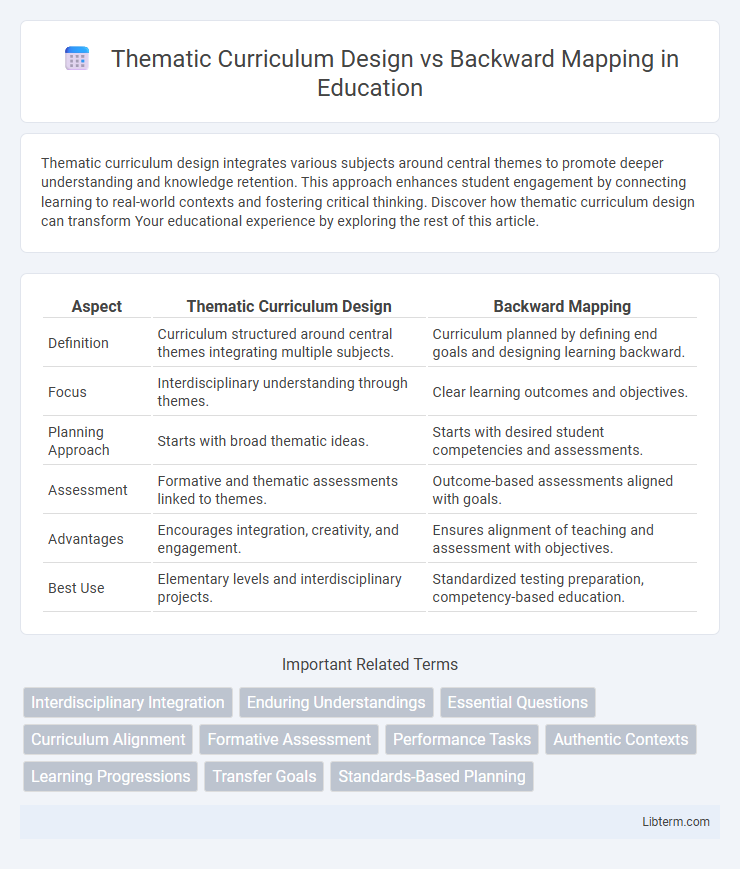
Table of Comparison
| Aspect | Thematic Curriculum Design | Backward Mapping |
|---|---|---|
| Definition | Curriculum structured around central themes integrating multiple subjects. | Curriculum planned by defining end goals and designing learning backward. |
| Focus | Interdisciplinary understanding through themes. | Clear learning outcomes and objectives. |
| Planning Approach | Starts with broad thematic ideas. | Starts with desired student competencies and assessments. |
| Assessment | Formative and thematic assessments linked to themes. | Outcome-based assessments aligned with goals. |
| Advantages | Encourages integration, creativity, and engagement. | Ensures alignment of teaching and assessment with objectives. |
| Best Use | Elementary levels and interdisciplinary projects. | Standardized testing preparation, competency-based education. |
Introduction to Curriculum Design Approaches
Thematic Curriculum Design organizes content around central themes, promoting interdisciplinary learning and real-world relevance, while Backward Mapping begins with clear learning outcomes and designs assessments and instruction to achieve those goals. Both approaches emphasize alignment between objectives, instruction, and evaluation but differ in starting points--Thematic Design focuses on integrating content around topics, whereas Backward Mapping prioritizes outcome-driven planning. Understanding these methods in curriculum design enhances educators' ability to create cohesive and purposeful learning experiences.
Defining Thematic Curriculum Design
Thematic Curriculum Design centers on organizing educational content around broad, interdisciplinary themes that connect various subjects for deeper understanding and relevance. This approach emphasizes integrating knowledge, skills, and attitudes within a cohesive framework to engage students in meaningful learning experiences. It contrasts with other models by prioritizing thematic coherence and real-world connections over isolated subject instruction.
Exploring Backward Mapping
Backward Mapping emphasizes starting curriculum design from desired learning outcomes and assessments, ensuring alignment with specific competency goals. This method allows educators to identify essential skills and knowledge students must master, promoting targeted instruction and measurable achievement. Exploring Backward Mapping reveals its advantage in creating focused, outcome-driven educational pathways compared to broader thematic approaches.
Key Differences Between Thematic and Backward Mapping
Thematic curriculum design organizes learning around central themes, promoting interdisciplinary connections and contextual understanding, while backward mapping starts with defining desired learning outcomes and planning assessments first to guide instruction. Thematic design emphasizes content integration and student engagement through real-world topics, whereas backward mapping prioritizes clear goals and measurable objectives to ensure alignment between teaching and assessment. Both methods aim to enhance learning effectiveness but differ fundamentally in their planning approach and focus areas.
Benefits of Thematic Curriculum Design
Thematic Curriculum Design promotes integrated learning by connecting multiple subjects around central themes, enhancing student engagement and deeper understanding. It encourages real-world application and interdisciplinary thinking, helping students develop critical thinking and problem-solving skills. This approach also allows for flexibility in teaching methods and content adaptation to diverse learner needs.
Advantages of Backward Mapping
Backward Mapping streamlines curriculum development by starting with clear learning outcomes, ensuring instructional activities directly align with desired student competencies. This approach enhances assessment accuracy by focusing on measurable goals, promoting targeted skill acquisition and knowledge retention. Educators benefit from a structured framework that facilitates efficient resource allocation and consistent evaluation across diverse learning environments.
Challenges in Implementing Thematic Design
Thematic curriculum design often faces challenges such as aligning interdisciplinary themes with standardized testing requirements and ensuring teacher preparedness for diverse content integration. Resource limitations and varying student readiness levels complicate the seamless implementation of thematic units across grade levels. Unlike backward mapping, which starts with desired outcomes, thematic design demands continuous adjustment to maintain coherence and relevance in dynamic classroom environments.
Common Obstacles in Backward Mapping
Common obstacles in backward mapping include difficulty in clearly defining desired learning outcomes, which can lead to misaligned assessments and instructional activities. Teachers often struggle with identifying specific standards and ensuring all necessary skills are covered, causing gaps in the curriculum. Time constraints and limited professional development opportunities further hinder effective implementation of backward mapping strategies.
Choosing the Right Approach for Your Educational Goals
Thematic curriculum design organizes learning around central themes, promoting interdisciplinary understanding and student engagement by connecting content to real-world contexts. Backward mapping starts with defining specific learning outcomes and assessments, ensuring a clear alignment of instruction with desired goals and standards. Choosing the right approach depends on educational goals: thematic design suits holistic, integrated learning experiences, while backward mapping supports targeted skill acquisition and measurable achievement.
Conclusion: Navigating Curriculum Design Choices
Choosing between Thematic Curriculum Design and Backward Mapping requires aligning educational goals with instructional strategies to maximize student engagement and learning outcomes. Thematic Curriculum Design fosters interdisciplinary connections and contextual understanding, while Backward Mapping emphasizes clear achievement targets and assessment-driven planning. Educators should evaluate specific curriculum objectives, available resources, and student needs to effectively navigate these curriculum design methodologies.
Thematic Curriculum Design Infographic