 libterm.com
 Compliance by Design integrates regulatory requirements into every stage of the product development process, ensuring adherence to laws and standards from conception to deployment. This proactive approach reduces risks, saves costs on potential penalties, and strengthens your organization's reputation. Discover how embracing Compliance by Design can transform your business strategy in the full article.
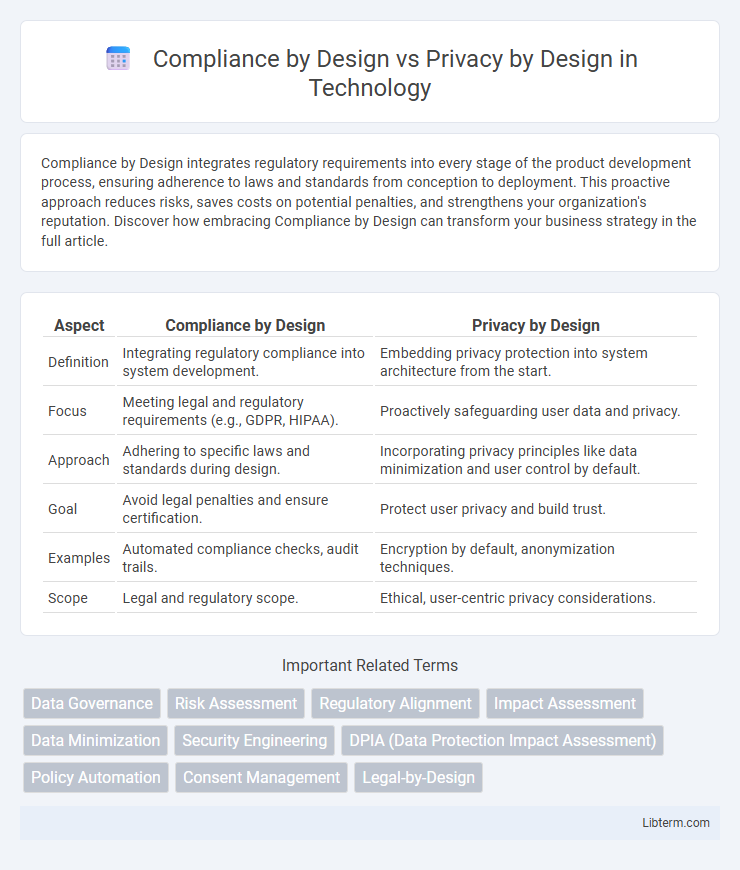
Table of Comparison
| Aspect | Compliance by Design | Privacy by Design |
|---|---|---|
| Definition | Integrating regulatory compliance into system development. | Embedding privacy protection into system architecture from the start. |
| Focus | Meeting legal and regulatory requirements (e.g., GDPR, HIPAA). | Proactively safeguarding user data and privacy. |
| Approach | Adhering to specific laws and standards during design. | Incorporating privacy principles like data minimization and user control by default. |
| Goal | Avoid legal penalties and ensure certification. | Protect user privacy and build trust. |
| Examples | Automated compliance checks, audit trails. | Encryption by default, anonymization techniques. |
| Scope | Legal and regulatory scope. | Ethical, user-centric privacy considerations. |
Introduction to Compliance by Design and Privacy by Design
Compliance by Design integrates legal and regulatory requirements directly into the software development lifecycle, ensuring systems meet standards such as GDPR and HIPAA from inception. Privacy by Design emphasizes embedding data protection principles proactively, focusing on minimizing personal data collection and ensuring user control and transparency. Both approaches prioritize risk management but differ in scope, with Compliance by Design addressing broader regulatory mandates and Privacy by Design concentrating specifically on safeguarding individual privacy rights.
Defining Compliance by Design
Compliance by Design integrates regulatory requirements into the development process to ensure products and services meet legal standards from inception, minimizing risks and costly retrofits. It involves embedding compliance checkpoints, automated controls, and continuous monitoring aligned with industry-specific regulations such as GDPR, HIPAA, or SOX. This proactive approach ensures that organizations adhere to all applicable laws and standards while optimizing operational efficiency and governance.
Understanding Privacy by Design
Privacy by Design prioritizes embedding data protection principles into the architecture of IT systems and business practices from the outset, ensuring user privacy through proactive measures such as data minimization, encryption, and user consent management. Unlike Compliance by Design, which centers on meeting legal and regulatory requirements like GDPR or CCPA, Privacy by Design emphasizes preventing privacy risks before they occur by integrating privacy-enhancing technologies and conducting impact assessments during the development phase. This approach fosters trust by making privacy an integral part of product lifecycle management rather than a reactive compliance checklist.
Core Principles of Compliance by Design
Compliance by Design prioritizes integrating regulatory requirements directly into the development process, ensuring systems adhere to laws such as GDPR, HIPAA, or CCPA from inception. Core principles include risk assessment, accountability, transparency, and continuous monitoring to prevent violations and ensure legal conformity. This proactive approach contrasts with Privacy by Design, which centers on embedding privacy protections and data minimization techniques into system architecture.
Key Principles of Privacy by Design
Privacy by Design emphasizes proactive integration of privacy measures into technology and organizational practices, focusing on seven key principles: data minimization, user-centric control, default privacy settings, full lifecycle protection, transparency, security safeguards, and respect for user privacy. Compliance by Design primarily ensures adherence to legal and regulatory requirements but may lack the holistic approach to user privacy that Privacy by Design embeds. Implementing Privacy by Design principles fosters trust and reduces privacy risks by embedding privacy into the core architecture from the outset.
Regulatory Frameworks Impacting Both Approaches
Compliance by Design and Privacy by Design are both critical methodologies embedded in regulatory frameworks like GDPR, HIPAA, and CCPA, ensuring data protection and lawful processing. Compliance by Design emphasizes adherence to legal requirements and industry standards throughout system development, while Privacy by Design prioritizes embedding user privacy from the initial stages, minimizing data exposure risk. Regulatory mandates impact both approaches by enforcing accountability, data minimization, and transparency, shaping organizational policies and technological implementations to meet evolving privacy and compliance standards.
Comparing Compliance by Design and Privacy by Design
Compliance by Design emphasizes integrating regulatory requirements into business processes and systems from the outset to ensure adherence to laws like GDPR and HIPAA. Privacy by Design centers on embedding data protection principles such as data minimization, user consent, and security into the architecture of products and services. The key difference lies in Compliance by Design focusing on legal conformity, while Privacy by Design prioritizes safeguarding personal data proactively.
Benefits and Challenges of Each Approach
Compliance by Design ensures systems adhere to legal regulations from the outset, reducing risks of fines and legal issues while enhancing organizational accountability. Privacy by Design focuses on embedding data protection principles into technology and processes, boosting user trust and minimizing data breaches but may require significant upfront investment and ongoing adaptation. Both approaches face challenges such as balancing functionality with strict regulatory requirements and integrating evolving laws into existing frameworks.
Integrating Compliance and Privacy in Business Processes
Compliance by Design focuses on embedding regulatory requirements and legal standards into business processes to ensure adherence from the outset. Privacy by Design emphasizes proactive data protection measures, integrating privacy principles directly into product development and operational workflows. Integrating both strategies streamlines risk management, reduces regulatory penalties, and enhances consumer trust by systematically aligning compliance obligations with robust data privacy practices.
Best Practices for Implementing Both Approaches
Compliance by Design ensures adherence to legal and regulatory frameworks from the outset, incorporating requirements such as GDPR, HIPAA, or CCPA into system architecture. Privacy by Design emphasizes proactive protection of user data through principles like data minimization, user consent, and anonymization techniques. Best practices for integrating both approaches include embedding compliance checkpoints into development lifecycles, conducting privacy impact assessments regularly, and fostering cross-functional collaboration between legal, IT, and security teams.
Compliance by Design Infographic